
Not Yet. Not Yet.
Starting Seeds the Minnesota Way

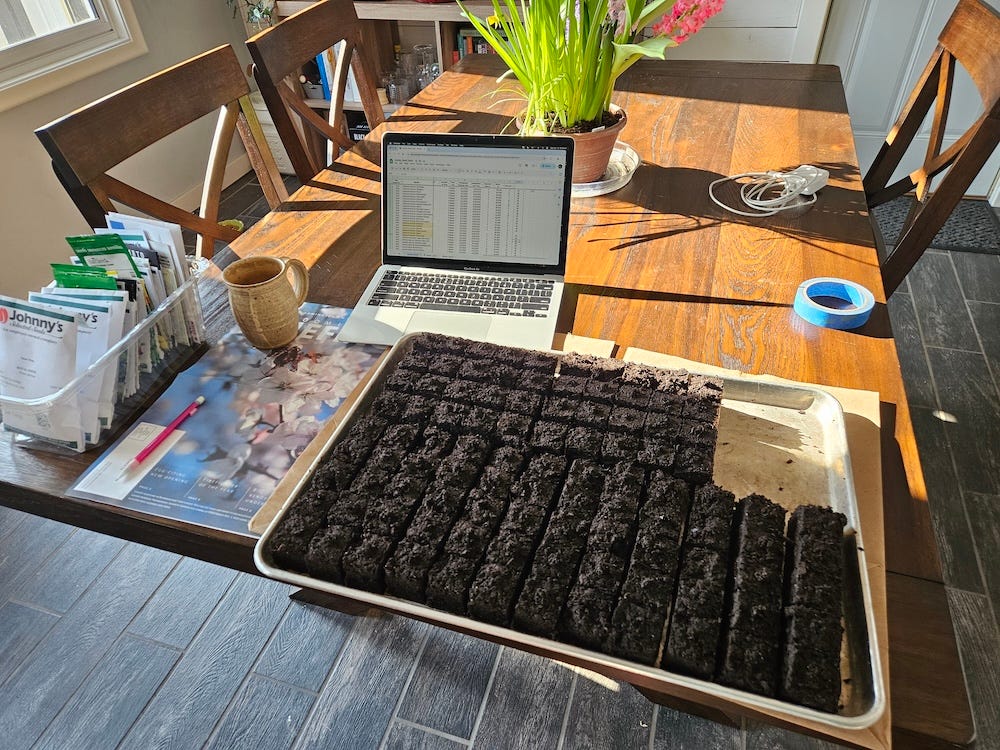
My news feeds are full of them right now.
Seed starting guides. Gorgeous photos of seedlings under grow lights. “Start these 10 vegetables today!” I scroll past and think: not yet. Not yet. Our last frost dates don’t care about the calendar on our phone or what’s working in Georgia right now.
Then the next headline catches me. “You should have started these seeds in January.” And suddenly I’m anxious. Am I already behind? Should I be rushing out for seed trays this weekend?
If you garden in Minnesota, Zones 3a through 5a, take a breath.
Laura Irish-Hanson, horticulture educator with the University of Minnesota Extension and a familiar voice on WCCO-AM Saturday mornings, says she’s fielding more seed starting questions than ever. Her consistent answer: you have time.
But use it wisely.
When to Start and How to Count Backward
Diana: For Minnesota gardeners, when is the right time to begin starting seeds indoors and how do we count backward from our last frost date?
Laura: It really depends on what you’re growing. And I’ll say right away: more plants do fine direct-seeded than people think. Tomatoes, for instance: you can direct seed them in most of Minnesota and still get fruit almost as soon as if you’d started them indoors. So don’t let indoor starting feel mandatory.
March: Cool-season crops, meaning cabbage, collards, kale. Also eggplant, parsley, thyme, pansies, and perennials like coneflower and bee balm.
April: Peppers, tomatoes if you’re not direct seeding, okra, and heat-lovers like basil, hibiscus, and marigolds.
May–July: Succession planting continues. For zinnias, that’s four weeks before last frost, along with watermelon for our short season, and cool-season crops again in June and July for fall harvests.
For counting backward, Laura uses a simple trick: every week of the year is numbered 1 through 52. If your transplant date falls in week 22 and your seedlings need eight weeks indoors, subtract eight - start in week 14, around mid-March.
For your specific last frost date, the Minnesota DNR Climate Summaries tool is your best resource.
Laura’s benchmark: the U of M St. Paul campus has a 90% chance of staying above 32°F at night by May 24. She aims for that 90% threshold. “I do not want to lose plants.”
Indoors or Out?
Diana: Which flowers and vegetables benefit from indoor seed starting and which are better direct-sown?
Laura: Plants that need special treatments or have a very long growing season are the ones we start indoors. One of my favorites is artichoke. I grow them for the flower, not the vegetable. You start it early, and at about two weeks old, put it in a 40-degree refrigerator for a week or two to mimic a cold period. That’s what induces it to flower. The blooms are absolutely stunning. Similarly, many perennials need cold stratification (a moist cold period in a sealed bag in the fridge) for 30–60 days before they’ll germinate. Or just direct seed them into the garden in winter and let nature do it for you. That’s my preference.
For direct seeding outdoors, the list is long: cosmos, zinnias, bachelor’s buttons, amaranth, marigolds, calendula, and most asters. Laura’s favorite: “Cosmos. You keep cutting them, they keep flowering, and the pollinators love them.”
A Word on Containers
Diana: What about those of us growing in pots and can you direct seed into a container?
Laura: You can, but if you want pots that are full and beautiful for as long as possible, start indoors and transplant in. If you direct seed into containers, keep moisture consistent. Small pots dry out faster than you’d think.
Pro tip: Laura says add just an inch of seed starting mix on top of your regular potting soil for small seeds. You get the fine-particle contact they need without filling the whole container with a mix that’s too fine.
Signs You’re Loving Your Seedlings Too Much
Diana: What are the signs of overwatering?
Laura: Roots need oxygen, and they get it from the air spaces in your potting mix. Constant overwatering fills those spaces with water and roots suffocate and rot. Watch for algae growing on the surface. That’s a reliable sign it’s too wet and too cool. Or seedlings that look slightly translucent or water-soaked.
The fix: Let things dry out between waterings.
Seed Starting Mix vs. Potting Soil
Diana: What’s the difference, and when do you use which?
Laura: Seed starting mix is much finer, which means more contact between the soil and seed and consistent moisture. Use it for small seeds in indoor trays. For larger seeds, meaning zinnias, sunflowers, melons, regular potting mix works fine.
And never fill a large outdoor container with seed starting mix; it’ll compact and stay too wet. Reserve it for small trays indoors, and use potting mix for eight-inch pots and larger.
Hardening Off
Diana: What exactly does hardening off mean and how do we do it safely?
Laura: Your plants have been living in steady temperatures, gentle light, and low wind. You can’t just put them outside into direct sun and spring gusts. Start in a spot with no direct sun like under a tree, or somewhere with just an hour or two of gentle morning light. Over one to two weeks, slowly increase sun and wind exposure.
Also slow your watering slightly before you start — outdoor conditions dry things out faster and you want roots to begin adjusting.
Pro tip: Laura says for gardeners with many trays: pick up a couple of inexpensive jelly roll pans at a thrift store. Load all your seed trays onto them, move everything out together, and cover with an old sheet on cool nights. Much easier than hauling individual trays in and out.
The Two Biggest Mistakes
Diana: What’s the biggest mistake you see?
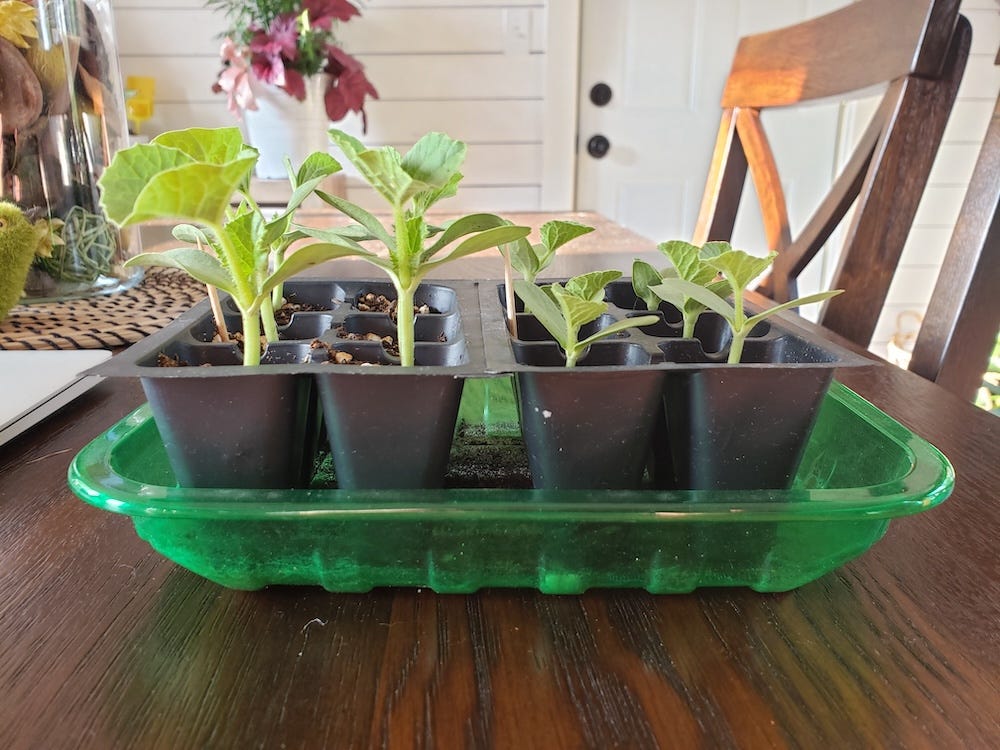
Laura: There are two mistakes. Starting seeds too early. I know people who started their tomatoes the first week of February. Those plants will be enormous. Bigger isn’t better for transplanting. Large plants experience more transplant shock, not less.
If you feel the itch in January or February, plant some lettuce in your window or start a small herb tray. That can satisfy the urge without setting you up for a plant that’s too big and stressed by planting time.
The second mistake: thinking a south-facing window gives your seedlings enough light. It doesn’t. Especially not in a Minnesota winter. Seedlings that bend and reach toward the glass are telling you they’re light-starved.
The solution is a grow light, kept two to three inches above the canopy and raised as plants grow. With 12 to 16 hours of strong light daily, you’ll grow compact, sturdy plants. “If you’re starting seeds indoors in Minnesota,” Laura says, “most people need a grow light.”
The Real Case for Starting from Seed
Diana: Is seed starting really more cost-effective and what about access to unusual varieties?
Laura: Across the board, yes. A $3 seed packet with 25 seeds gives you two or three seasons of plants. The variety question is just as compelling. Let’s say you want a black-and-white garden with deep, near-black flowers and bold whites. Those options exist in seed catalogs. At most garden centers, you get the usual suspects. Starting from seed opens up a much wider world.
One Piece of Advice
Diana: If you could give gardeners one piece of seed starting advice, what would it be?
Laura: Have fun, and try something new. Ask people in your community what they miss seeing and they might share a memory from a past family garden. That is what it’s really about. Seed starting makes that possible.
Bonus Tip: Free Seeds at Your Library
Before you order online or head to the garden center, check your local public library. Minnesota has a growing network of seed libraries where you can borrow seeds, grow them, and return seeds at season’s end to keep the collection going. Learn more about Minnesota seed libraries here.
Laura Irish-Hanson is a horticulture educator with the University of Minnesota Extension.
Find seed starting resources at: https://extension.umn.edu/planting-and-growing-guides/starting-seeds-indoors
Happy seed starting!
Until next time,
Diana
PS. What will you try this year? Let me know. I’d love to hear about it!
#bloomwithme
So helpful! And thorough. My husband is the family gardner. I've passed this on to him. Thank you.
I've been harvesting my indoor lettuce and spinach for months. Great advice for us Zone 3a folks. We are still shovelling snow here in Edmonton, Alberta.